Last week I wrote about the Beer Index, the idea that the most honest exchange rate is not what your banking app shows you. It is what one beer actually costs in your home currency once FX and local inflation have done their work.
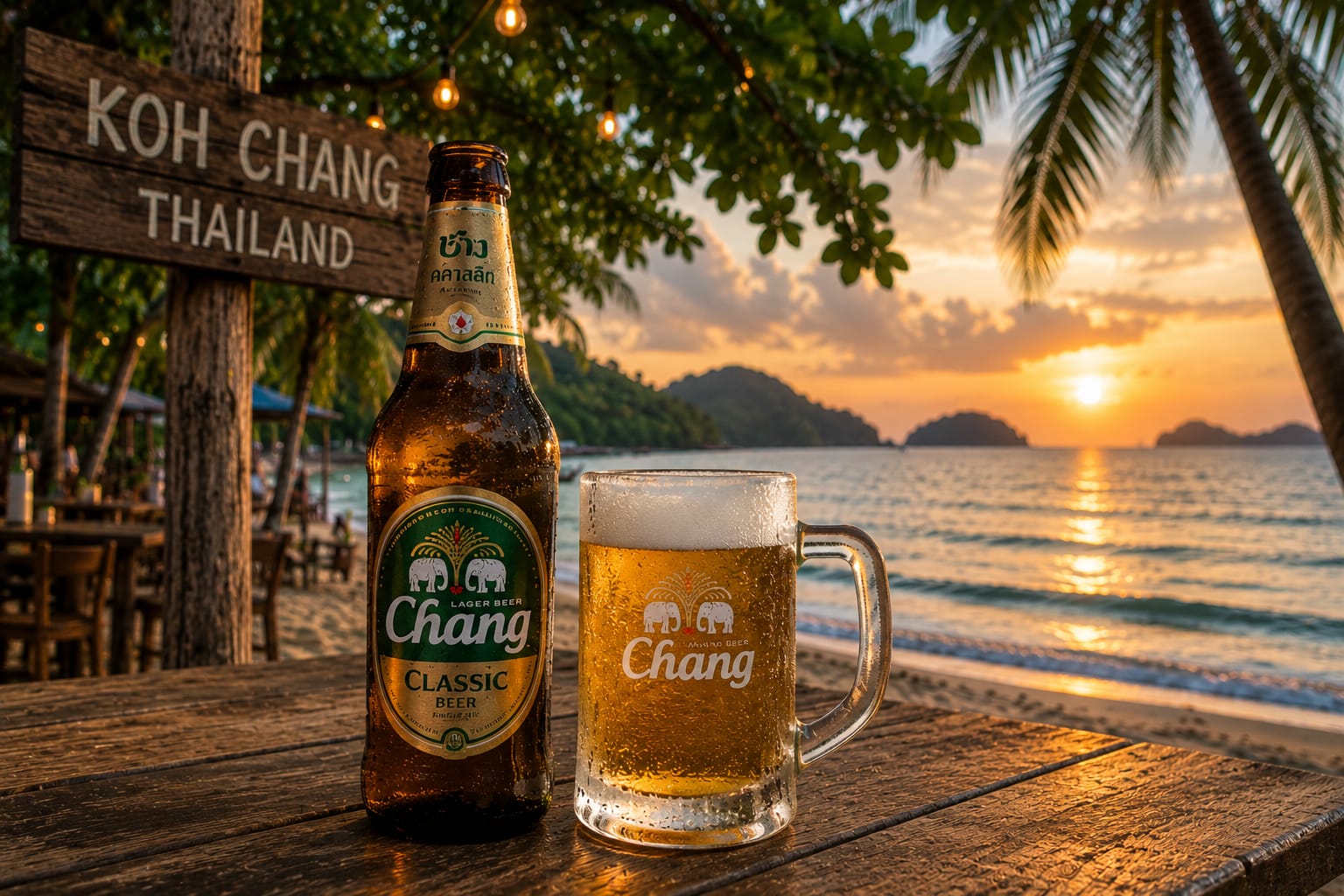
The example was a Chang on a Thai beach: 56p in 2005, £2.76 today. A five-times increase, mostly invisible to anyone who only watches the GBP/THB chart.
Today we go wider, across 14 cities in Southeast Asia. Where does your pound still buy the most beer? Where has it quietly become a tourist trap? And what does that tell you about emerging market currencies, expat cost of living, and where the smart money is going to retire?
The numbers below are sourced from Numbeo's March 2026 data, standardised to a 0.5 litre domestic draught beer in a mid-range restaurant or bar. Not the supermarket. Not the rooftop cocktail bar. The everyday transaction.
All prices are converted to GBP at current rates, around £1 = $1.27.
The 2026 Beer Index, ranked cheapest to most expensive
| Rank | City | Country | Beer |
|---|---|---|---|
| 1 | Hanoi | Vietnam | £0.75 |
| 2 | Da Nang | Vietnam | £0.75 |
| 3 | Ho Chi Minh City | Vietnam | £0.90 |
| 4 | Phnom Penh | Cambodia | £1.18 |
| 5 | Cebu | Philippines | £1.18 |
| 6 | Manila | Philippines | £1.24 |
| 7 | Hua Hin | Thailand | £1.69 |
| 8 | Phuket | Thailand | £1.69 |
| 9 | Chiang Mai | Thailand | £1.80 |
| 10 | Pattaya | Thailand | £1.80 |
| 11 | Bali | Indonesia | £1.86 |
| 12 | Bangkok | Thailand | £2.39 |
| 13 | Kuala Lumpur | Malaysia | £3.60 |
| 14 | Singapore | Singapore | £6.14 |
For context, a pint of lager in a UK pub now averages around £4.80, and pushes past £7 in central London. So even Bangkok, the most expensive Thai city on the list, is offering you a beer at half the UK price. And Vietnam is offering it at one sixth.
The Vietnam story is the real one
Look at Hanoi. Seventy-five pence. For a half litre. In a sit-down bar.
Vietnam is doing now what Thailand was doing in 2005. The dong is weak, local inflation on consumables has been controlled, and the beer industry is dominated by domestic brands: Bia Hanoi, Saigon, 333. They are produced and sold at scale. A foreigner with sterling walks in and feels like a millionaire.
The interesting question is how long this lasts. Vietnam's economy is growing at 6-7% a year. Tourism is climbing fast. The dong has been quietly strengthening against most baskets. If you ran the Beer Index in Hanoi in 2005, you would find numbers that look very similar to what you see today, but the country is on a much steeper development curve than Thailand was at the same point. The window is open, but it is closing.
This is the expat arbitrage in plain sight. The people who moved to Thailand in 2005 caught a 20-year run of cheap living. The people moving to Vietnam now might catch the next one.
Thailand: still cheap, no longer a steal
Notice how Thailand bunches in the middle of the table. Hua Hin, Phuket, Chiang Mai and Pattaya all cluster around £1.69-£1.80. Bangkok is the outlier at £2.39, but that is still half the UK price.
If you are choosing between those Thai bases, the beer number is only the starter signal. The practical decision is in the city comparison: Chiang Mai vs Pattaya for retirement rhythm, Phuket vs Pattaya for island premium versus coastal convenience, and Bangkok vs Pattaya if you are weighing capital infrastructure against beach access.
What has changed is the gap. In 2005, Thailand was four to five times cheaper than the UK on a beer. Today, it is two to three times cheaper. Still good. Not life-changing.
This is what currency strength plus inflation does over two decades. The baht has been one of the most resilient currencies in Southeast Asia. Tourism has driven up prices in coastal areas. The country has industrialised, urbanised, and joined the global middle-income club. The beer did not get more expensive in any single year. It got more expensive every year.
Thailand is no longer the cheap option. It is the comfortable option. There is a difference, and your retirement budget needs to know about it.
The Bali surprise
A lot of British tourists assume Indonesia is dirt cheap. The Beer Index says otherwise. At £1.86, Bali is more expensive than every Thai city except Bangkok.
This is not really an Indonesia story. It is a Bali story. The island has been overrun by Australian and European tourism, alcohol carries heavy import and excise taxes because Indonesia is a Muslim-majority country, and beach club pricing has become detached from local economic reality. If you ran the same query for Jakarta or Surabaya, the numbers would come down significantly.
The lesson: country-level Beer Index figures lie. You need city-level data, because tourist hotspots inside cheap countries can be more expensive than the cheap parts of expensive countries. A beer in Bali costs more than a beer in central Bangkok. That is not what most British holidaymakers expect.
Kuala Lumpur and Singapore: the cliff edge
Once you cross into Malaysia, the Beer Index doubles. Kuala Lumpur at £3.60 is more expensive than Bangkok. And Singapore at £6.14 is more expensive than most UK pubs.
Why? Two reasons. Malaysia, like Indonesia, taxes alcohol heavily on religious grounds. And Singapore is Singapore, a high-income, high-cost city state where every consumer good carries a premium.
If you are planning a Southeast Asian retirement, this is the line. South of Singapore the beer is cheap. Cross into Singapore proper and you are paying London prices in a tropical climate.
What the Beer Index is really telling you
Strip back the surface story and the table above is a leading indicator of three things.
First, currency strength. Countries where the beer is cheap relative to your home currency are countries whose currency is structurally weaker than yours. That is not a bug. It is the headline. The dong, the peso and the riel are all weaker than the pound on a long-run trend. The baht is closing the gap. The Singapore dollar has overtaken it entirely.
Second, inflation trajectory. Cheap beer today does not mean cheap beer in five years. Thailand was Vietnam twenty years ago. Vietnam might be Thailand in 2045. The Beer Index changes faster than most people realise.
Third, expat capacity. A country with cheap beer and a weak currency is a country where £30,000 of UK pension income lives like £80,000 of local equivalent. That is the actual maths behind every Southeast Asian retirement YouTube video you have ever watched. The Beer Index is just the most readable version of the calculation.
The takeaway
If you are a Brit holding sterling and dreaming of a future abroad, the Beer Index is your friend. Run it on the cities you are considering. Run it on the things you actually buy, not just beer. Watch how it changes year on year.
The headline FX rate is the snapshot. The Beer Index is the trajectory. And the trajectory is what matters when you are planning a life, not a holiday.
Hanoi is at 75p. Bangkok is at £2.39. Singapore is more expensive than your local Wetherspoons. That is not a chart on a banking app. That is a map of where the pound still has power, and where it does not.
Mine's a Bia Hanoi. While the price is still right.