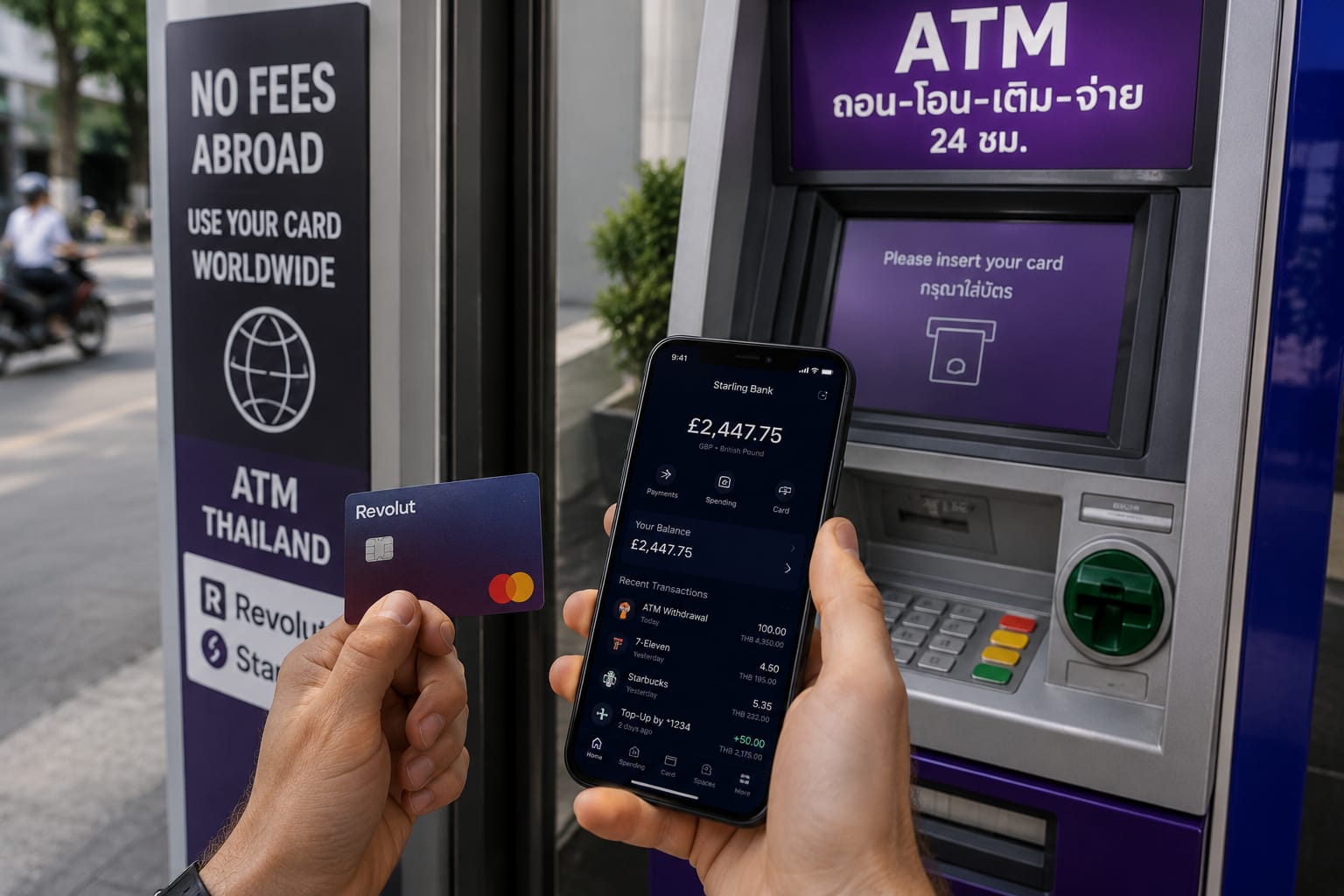
Thailand has drawn British retirees for decades: weather, private hospitals, lower day-to-day costs, and a familiar expat trail. The visa is not the obstacle most people expect. The money rules around it are.
Quick answer: for a Thailand retirement visa, start with three checks: are you 50 or over, can you prove either the required baht deposit or monthly income, and can you manage the GBP/THB exchange-rate risk without leaving too much money trapped in a low-yield Thai account?
Looking for the full move plan? If your question is the broader retire to Thailand from the UK decision, start with that UK retiree planning hub first. This page is the deeper visa-money guide once you know retirement in Thailand is the route you want.
Thailand retirement visa routes that matter
For UK citizens, Thailand retirement visa planning usually means comparing four practical routes. The ordinary Non-Immigrant O retirement route is the simpler starting point for many applicants. The O-A route adds stricter document and insurance expectations. The O-X route is much more deposit-heavy. The Long-Term Resident wealthy pensioner route is aimed at higher-income retirees and is handled through Thailand's Board of Investment.
The financial proof is where planning should begin. If your pension is paid in pounds, the visa number is still measured in baht. Check the current value of the 65,000 THB income benchmark and the 800,000 THB deposit benchmark, then leave a margin for sterling weakness and provider spreads.
UK retirement checklist: before you move savings into baht, check the visa route, pension-transfer method, Thai bank-account evidence, health-insurance position and UK fallback plan together. The practical companion page is Retire to Thailand from the UK: the money checklist; for recurring pension payments, also read the UK pension transfer to Thailand guide.
The Non-Immigrant O-A visa
- Age: 50 or over.
- Finances: 800,000 THB, 65,000 THB a month of proven income, or a permitted combination route. The London embassy currently translates this to roughly £18,000 or £1,500 a month for UK/Ireland applicants.
- Health insurance: for O-A, a Thai or foreign policy with at least 100,000 USD or 3,000,000 THB cover, with the required certificate if using a foreign insurer.
- Costs: the London O-A visa fee is currently £150. Insurance cost depends heavily on age, exclusions, deductible and whether the insurer will sign the required certificate.
The Long-Term Resident visa
The LTR runs for up to ten years and is run through Thailand's Board of Investment, not the ordinary retirement-extension route. For wealthy pensioners, the clean route is at least 80,000 USD a year of unearned or passive income. If income is lower but at least 40,000 USD a year, BOI currently requires an additional 250,000 USD qualifying Thai investment.
LTR also has its own insurance or self-insurance requirement: 50,000 USD medical cover, Thai social security, or a 100,000 USD bank deposit held for at least 12 months. The in-Thailand visa issuance fee is 50,000 THB, but overseas/e-visa fees can vary.
The 800,000 baht trap
This is the part that costs people. For retirement extensions inside Thailand, the official summary says the 800,000 THB deposit must be in a Thai commercial bank for at least two months before the application and at least three months after approval. After that, the balance may not fall below 400,000 THB. In practice, a large part of the sum is locked up for most of the year, earning a Thai savings rate, while your pension arrives in pounds and is converted on whatever day you happen to move it.
The FX trap: retirees on the income method top up that Thai account in ad-hoc lumps, taking whatever GBP/THB rate falls on transfer day. Over a retirement that drift, plus poor transfer rates, dwarfs the visa fee many times over.
Where to actually live on it
A comfortable retirement budget depends heavily on rent, insurance, travel, imported habits and medical cover. Chiang Mai remains the value option, Pattaya has the largest established expat community, and Hua Hin sits as the quieter middle ground favoured by many British couples.
Before any of this works you need a Thai bank account for the deposit or the monthly transfers, our guide to opening one as a foreigner covers the documents and the branches that say yes.
Retiring to Thailand from the UK: common questions
Can I retire to Thailand from the UK in 2026?
Yes, if you meet the age, financial, insurance and document requirements for the route you choose. Most UK retirees should compare the ordinary retirement visa route against the O-A and LTR routes before moving money, because each route changes how much cash needs to be held, where it needs to be held, and what evidence is needed.
How much money do UK citizens need for a Thailand retirement visa?
The ordinary retirement visa routes commonly revolve around 800,000 THB in a Thai bank, 65,000 THB a month income, or a permitted combination route. Embassy sterling equivalents move with exchange rates, so use the baht rule as the planning anchor and check the Thai Embassy or e-visa site before applying.
What is the biggest money risk when retiring to Thailand from the UK?
The biggest recurring risk is poor GBP/THB conversion. A one-off visa fee is visible. A weak exchange rate, bank spread, card fee, or badly timed pension transfer repeats every month and can quietly cost more than the paperwork.