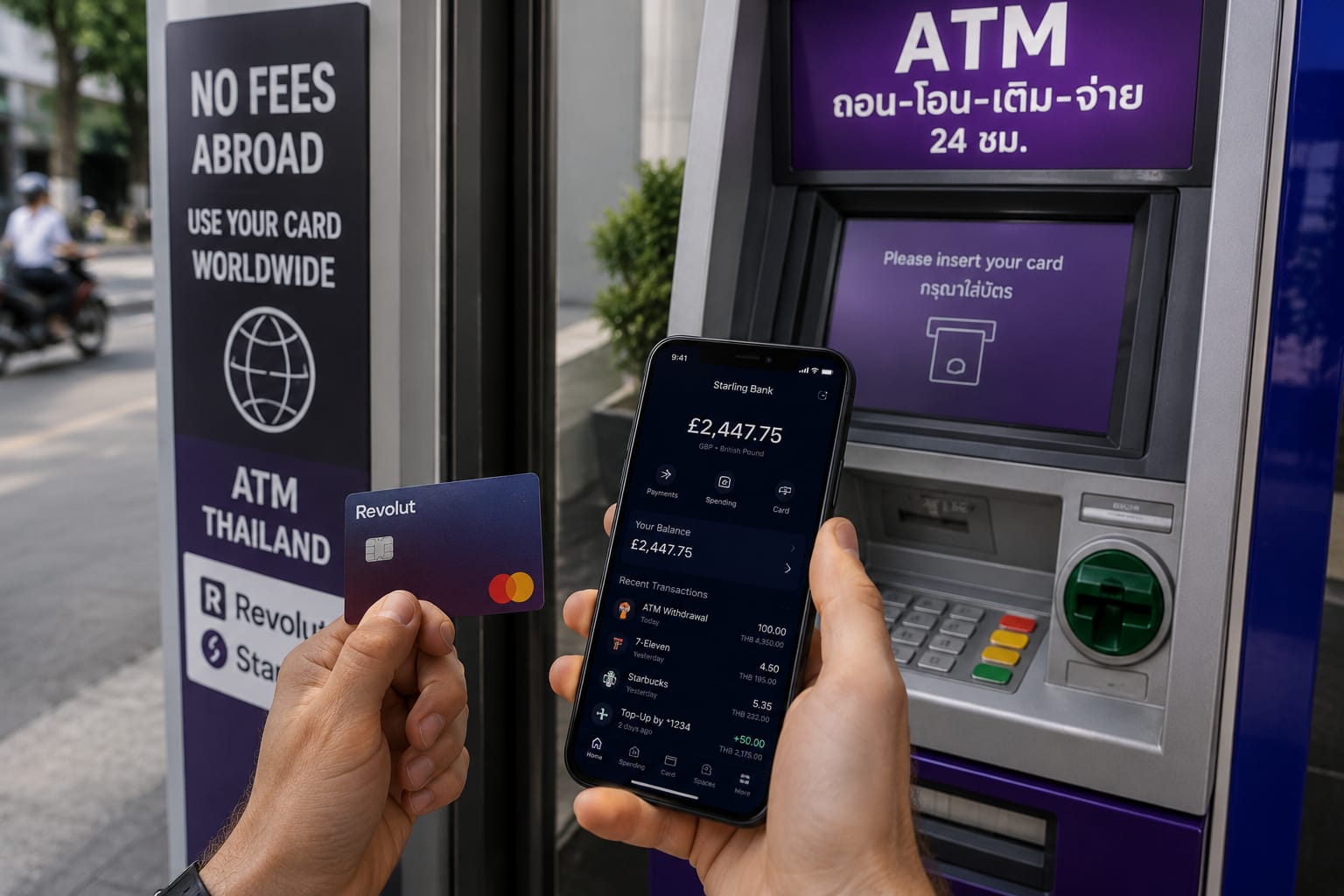
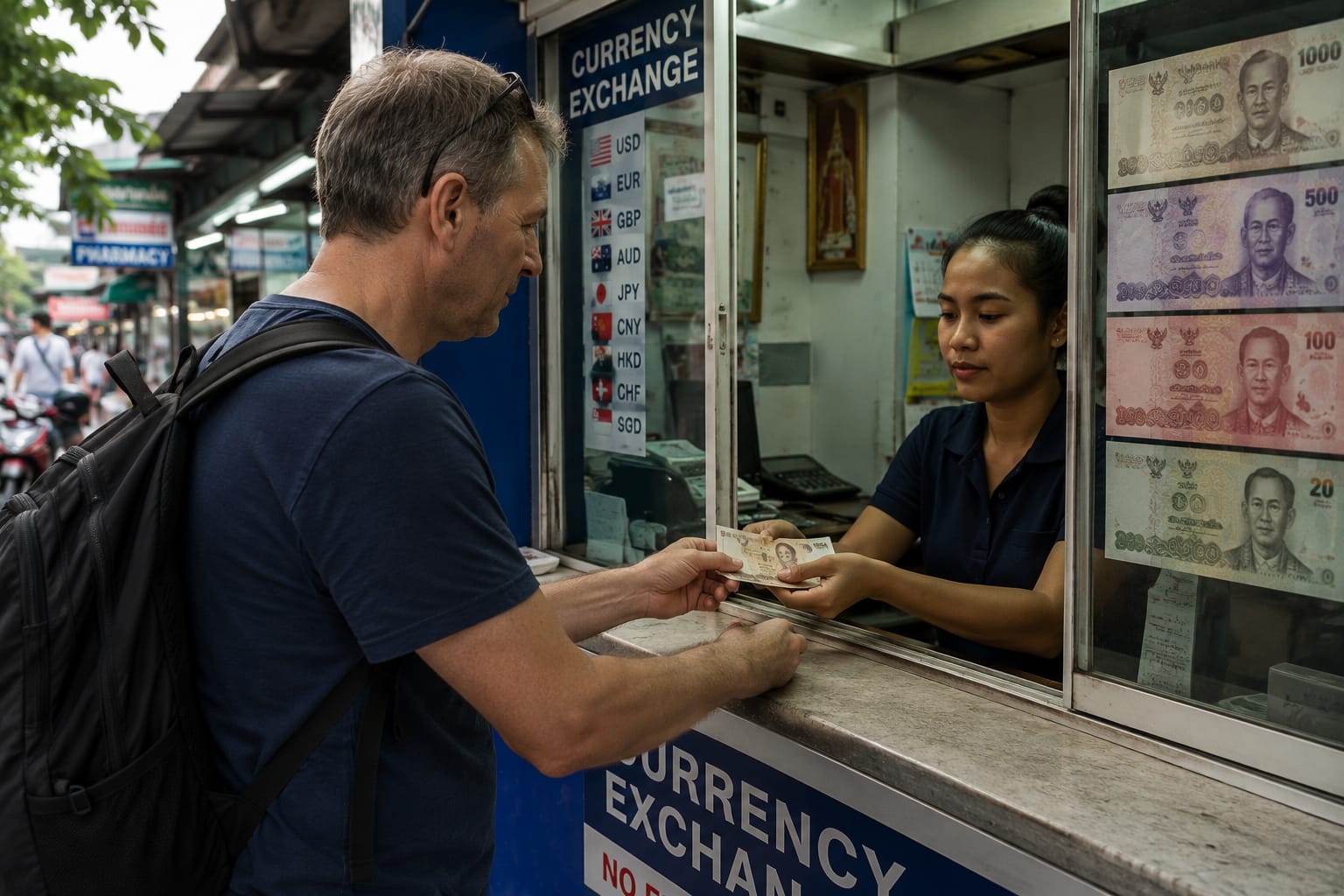
There is a piece of received wisdom in British personal finance writing that the Thai baht moves with the Federal Reserve. When American interest rates go up the dollar gets stronger, the baht gets weaker, and the rate you get on a transfer from Lloyds or Barclays goes down. It is the version of the story that is easy to tell because it puts the cause somewhere familiar.
It is also, this year, mostly wrong.
The baht is weaker than it was last summer, and the reason has very little to do with the Fed. The reason is that Thailand imports a lot of its energy from the Middle East, and the war there is now in its second year. Every pound you send to Bangkok this month is buying you fewer baht than it did in October, and the Bank of Thailand is sitting with its policy rate at one percent, the lowest in years, because that is the only lever it can really pull.
If you are sending money to family, paying a mortgage on a condo, funding a retirement visa, or just trying to work out whether to buy your holiday baht today or next month, the question is worth understanding properly. So let us walk through what actually happened.
What the Bank of Thailand did
The Bank of Thailand's Monetary Policy Committee meets six times a year. The last meeting was on 29 April 2026. They voted six to nothing to hold the policy rate at 1.00 percent, the same level it has been since the February meeting. That is the lowest the rate has been since the pandemic emergency cuts of 2020.
To get a sense of how unusual this is: the rate was at 2.50 percent for most of 2024. It came down through 2025 in a series of cuts, each one prompted by a slightly different set of worries. By late 2025 the cuts were about US trade policy and weak tourist arrivals. By early 2026 they were about something else.
The April statement was unusually clear about what changed. The committee said, in plain language, that the war in the Middle East has had a direct impact on growth by increasing business costs and eroding household purchasing power. They cut their own growth forecast for 2026 to one and a half percent, which is the lowest figure they have published in any non-pandemic year on record. Inflation is now expected to average 2.9 percent through the year, above the upper bound of their target range.
This is the polite institutional language for: the cost of energy has gone up, Thai households are spending more on the same amount of fuel and electricity, businesses are passing those costs through, and tourists are noticing that everything in Bangkok is more expensive than it was. The Strait of Hormuz is sometimes closed, sometimes open, and never reliable.
Why this matters for the rate you get
There is a chain of cause and effect here that is worth following all the way through.
Thailand imports more than half its energy. When global oil and gas prices rise, Thai importers need more dollars to pay for the same amount of fuel. Those dollars have to come from somewhere, which usually means selling baht to buy them. That selling pressure weakens the baht against the dollar, and because the pound largely tracks the dollar at the moment, it weakens against the pound by extension.
At the same time, the Bank of Thailand is reluctant to raise interest rates to defend the currency, because higher rates would slow an already slowing economy. So instead they accept a weaker baht as the price of supporting growth. The April statement is essentially that position written out at length.
For you, this means two things. First, the rate you get when you send pounds to Thailand is materially better than it was twelve months ago. Sending a thousand pounds via Wise in May 2025 got you roughly 42,800 baht. The same thousand pounds at the latest reference rate is around 44,585 baht. Second, that rate is unlikely to swing back hard in the near future, because the structural cause of the weakness is not finished. Energy prices remain elevated, the war is not over, the Bank of Thailand has signalled it is comfortable with the current level of the rate.
If you are sitting on pounds and wondering whether to convert now or wait, the honest answer is that nobody knows. But the case for waiting is weaker than usual. The factors that have been pushing the baht down are not the kind that resolve overnight.
What to actually watch
Source-backed macro watch
The next macro dates for GBP/THB
Checked 23 May 2026
These are the official calendar dates this forecast is anchored to, not vague market-watch noise.
UK CPI - May 2026
Higher inflation can support GBP through rate expectations; softer inflation can pull GBP/THB lower.
ONS release calendar · 17 June 2026
FOMC decision + SEP
Dollar direction feeds Asian FX and USD/THB, then often spills into GBP/THB through risk sentiment.
Federal Reserve FOMC calendar · 17 June 2026
Bank of England MPC decision
The vote split and guidance affect sterling, especially if inflation has surprised the day before.
Bank of England MPC dates · 18 June 2026
Bank of Thailand MPC decision
The policy-rate decision and statement language set the near-term tone for the baht.
Bank of Thailand MPC schedule · 24 June 2026
Upcoming macro dates are checked against official BoT, Fed, Bank of England, and ONS calendars. Release times can still change, so forecasts link back to the official source. Dates are local publication dates. UK releases use London time; Thai MPC releases use Bangkok time; FOMC decisions are shown by meeting day.
There are three signals worth following over the next two months.
The first is the next MPC meeting, scheduled for 24 June 2026. The Bank of Thailand publishes its meeting schedule in advance, and the June decision is the first clear policy checkpoint after the April hold. The market consensus going in will almost certainly be another hold at one percent. The interesting question is whether the committee softens its language on growth or sharpens it. A more pessimistic statement would push the baht weaker still. A more confident one might lift it a quarter percent against the pound. Neither would be enormous, but neither would be invisible either.
The second is the oil price, which you can check anywhere. When the price of Brent crude spikes, the baht weakens within a week. When it falls and stays fallen, the baht recovers in a slow, lumpy way that takes a month or two. There is a relationship there that is genuinely tradeable, and you do not need a Bloomberg terminal to see it.
The third is tourist arrivals, which the Ministry of Tourism and Sports publishes monthly. Thai tourism is one of the few things that buys baht rather than selling it. If the arrival numbers start improving, the baht gets a tailwind that does not depend on anything happening in Tehran. If they keep falling, the weakness extends.
What this means in practice
If you are a UK reader sending money to Thailand on a regular schedule, the practical implications are small but useful.
If you have flexibility on when you convert, the rate available today is genuinely good by recent standards. Locking in a chunk of your annual transfer requirement now rather than spreading it through the year is a reasonable bet, though it is a bet. Wise has been pricing GBP to THB at within 0.3 percent of the mid-market rate this week, which is the rate the Bank of Thailand itself would be quoting in the interbank market. Most British high street banks are still pricing at three to four percent off, which on a thousand pounds is the cost of a couple of nights in a decent Bangkok hotel.
If you are working to a fixed monthly schedule because of a mortgage or visa requirement, the rate you get is what you get, and there is nothing strategic to do beyond using the cheapest legitimate provider you can find. The provider comparison table on the Send page is rebenched every week against a real test transfer, and the gap between the best and worst providers in any given week is rarely less than two percent.
If you are buying holiday spending money for a trip this summer, the calculus is different again. The rate today is better than the rate this time last year, and the rate three months from now is more likely to be similar than dramatically different. Buying now removes a question you do not really need to be asking on your holiday.
The piece nobody usually writes
Most British personal finance coverage of the baht is one of two things: a piece about whether to buy your holiday money at the airport or in advance, or a piece about the Bank of England's relationship to the Fed. Both are useful in their way, and neither is quite the right shape for what is actually happening.
What is actually happening is that a currency on the other side of the world is being moved around by a war on the edge of Europe and a price chart in Singapore. The Bank of Thailand is doing what central banks do when the cause of their inflation is outside their control: holding rates steady, accepting a weaker currency, hoping the cause subsides. For UK readers with money to move, the unfamiliar part is that this works out in our favour. Each pound buys more baht than it used to. The expensive cup of coffee in Bangkok stays expensive in baht and gets cheaper in pounds.
The next meeting is scheduled for 24 June 2026. We will be watching the language as much as the rate, and we will write it up when it lands. Until then, the converter on every conversion page uses the latest daily mid-market snapshot to give you the honest reference figure, not the bank one.
That, more than anything, is what The Baht is trying to do.