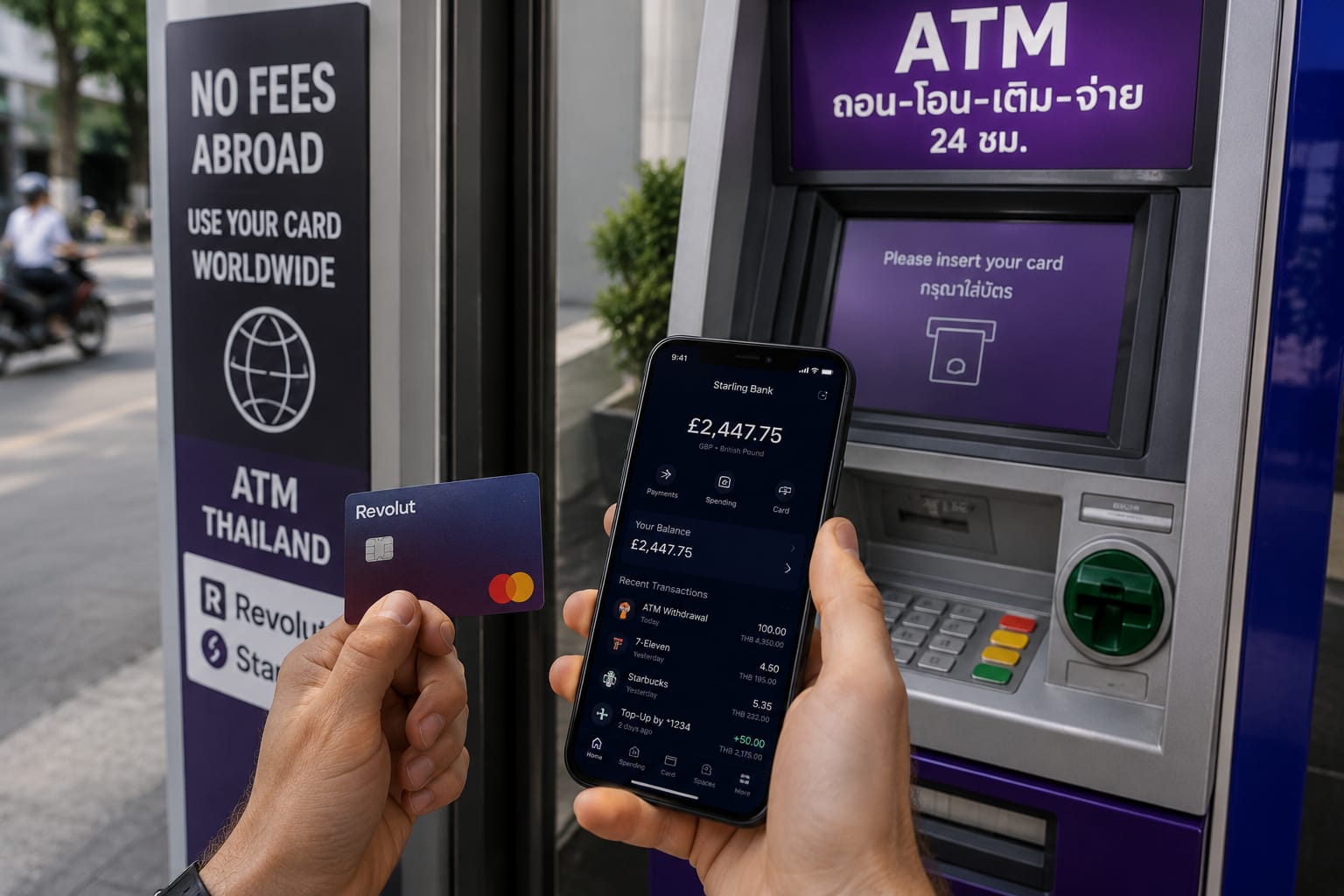
Most Thai cash machines currently show a local operator fee on foreign cards, commonly 220 THB, per withdrawal. Your own card issuer can add more on top. The only variables you control are how often you withdraw, how much you withdraw, and whether you accept the machine's currency conversion.
That single fact decides everything. Take out 1,000 THB and the fee is a punishing 22 per cent of your money. Take out 20,000 THB and the same fee is about 1.1 per cent. The maths is not subtle.
The one rule: withdraw large, withdraw rarely. Two or three big withdrawals across a fortnight, not a daily top-up at whatever machine is nearest.
How to keep the fee small
- Withdraw larger amounts less often, as long as that fits your security and cash-carrying comfort.
- Use a UK card with clear overseas terms, and check whether it adds its own ATM or foreign-exchange fee.
- Always choose to be charged in THB, never GBP. Declining the machine's currency conversion every single time is worth several per cent.
- Pay by card where you can. Hotels, 7-Eleven, restaurants and Grab nearly all take contactless, and that route never touches the 220 THB.
Which Thai ATMs to use
Functionally, the ATM screen matters more than the logo. Check the fee, the maximum withdrawal, and whether the machine offers conversion into GBP. A higher withdrawal limit can mean fewer local operator fees, but do not carry more cash than you are comfortable losing.
Cash or card, by situation
- Street food and markets
- Tuk-tuks and songthaews
- Small shops and massage
- Tips
- Hotels
- 7-Eleven
- Restaurants
- Grab rides
For the full card comparison behind this, see our fourteen-day field test of which card setup worked best in Thailand.